
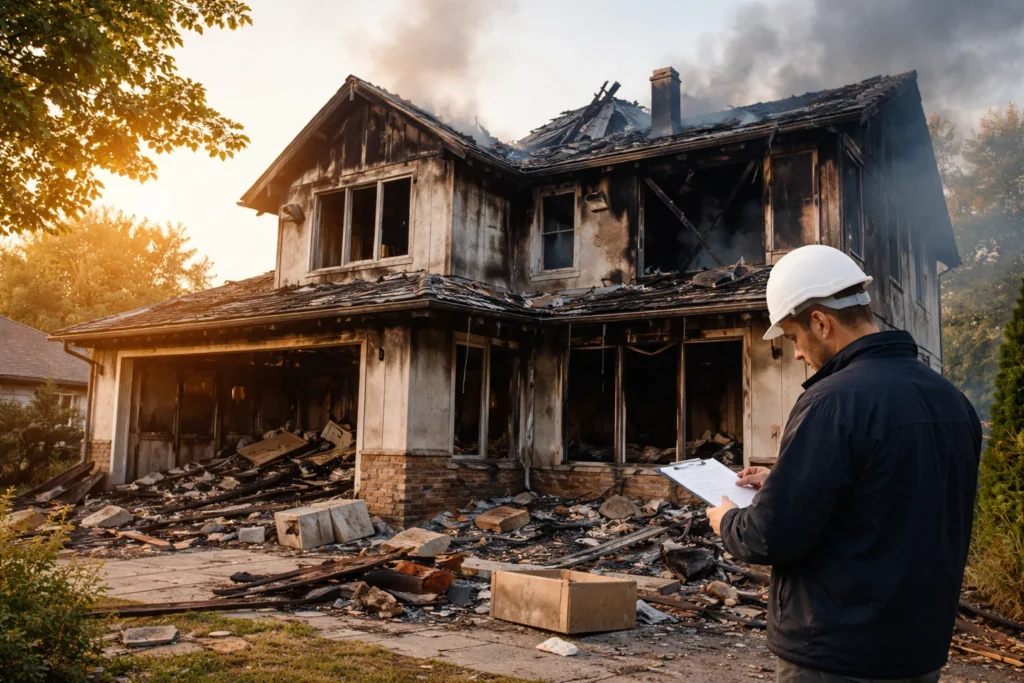
A house fire doesn’t just damage walls and belongings it disrupts your entire life. In those first chaotic hours and days, you’re juggling safety, temporary housing, and a flood of decisions. Somewhere in the middle of it all, your insurance claim begins. And this is where a fire insurance adjuster can quietly determine whether you recover fully… or settle for far less than you deserve. Let’s break it down. Clearly. Practically. And without fluff.
The Short Answer: What Is a Fire Insurance Adjuster?
A fire insurance adjuster is a professional who evaluates fire-related damage and determines how much money should be paid out on an insurance claim. Simple enough, right? Not quite.
There are three types of adjusters you might encounter:
- Insurance company adjusters – They work for the insurer
- Independent adjusters – Contracted by insurance companies
- Public adjusters – Hired by you, the policyholder
Here’s the key takeaway:
Only a public adjuster works fully in your best interest.
Types of Fire Insurance Adjusters Explained
Understanding who’s who can change how you approach your claim.
1. Company (Staff) Adjusters
These are employees of your insurance company. Their job is to assess damage and settle claims but always within the company’s financial framework.
They are not your advocate.
2. Independent Adjusters
They aren’t employees, but they’re still hired by insurers. Think of them as outsourced evaluators. Their loyalty still aligns with the insurance company.
3. Public Adjusters
This is where things shift.
A public fire insurance adjuster represents you. They interpret your policy, assess your losses, and negotiate directly with the insurer on your behalf. Their goal is simple: maximize your claim. If you’re in Bryan, this local expertise becomes even more valuable. Building codes, contractor costs, and regional risks all play a role.
What a Fire Insurance Adjuster Actually Does
Let’s get practical. What does a fire insurance adjuster actually do day to day?
Here’s the breakdown:
- Conduct a detailed inspection of fire, smoke, and water damage
- Document structural losses and personal property
- Review your insurance policy line by line
- Estimate repair and replacement costs accurately
- Identify hidden or overlooked damages
- Prepare and submit claim documentation
- Negotiate directly with the insurance company
It’s part investigator. Part negotiator. Part strategist. And when done right, it can significantly increase your final payout.
Why Fire Claims Are More Complicated Than They Seem
At first glance, fire damage feels obvious. Burned materials. Visible destruction. But the real complexity? It’s what you don’t see.
Hidden Issues That Affect Your Claim
- Smoke damage that spreads far beyond the fire’s origin
- Soot contamination inside walls, insulation, and HVAC systems
- Water damage from firefighting efforts
- Structural weakening that isn’t immediately visible
- Code upgrade requirements during rebuilding
Interestingly, understanding complex systems even outside insurance can highlight how layered problems really are. For example, the concept of Isomorphism in mathematics shows how two very different structures can actually share the same underlying framework. Fire damage works in a similar way what looks simple on the surface often hides deeper structural realities. Now add stress, time pressure, and unfamiliar paperwork. It’s a lot. That’s why having a skilled fire insurance adjuster can be the difference between a rushed claim and a properly evaluated one.
When Should You Call a Fire Insurance Adjuster?
Timing matters more than most people realize.
Here’s when you should seriously consider bringing in a fire insurance adjuster:
- Immediately after the fire – before critical mistakes happen
- Before giving recorded statements to your insurer
- When damages are extensive or complex
- If your claim is delayed or underpaid
- If you feel overwhelmed or unsure about the process
The earlier you get expert help, the more control you keep.
The Fire Claim Process Step-by-Step
Let’s walk through what typically happens after a fire and where a fire insurance adjuster steps in.
Step 1: Emergency Response and Safety
Secure the property. Prevent further damage. Safety first, always.
Step 2: Filing the Insurance Claim
You notify your insurer and start the claim. This triggers the process.
Step 3: Damage Assessment
Adjusters inspect the property. This is where initial evaluations happen and where discrepancies often begin.
Step 4: Documentation and Estimates
You (or your adjuster) create a detailed inventory and cost estimate.
Step 5: Negotiation and Settlement
This is the turning point. Numbers are discussed. Offers are made. And often… they’re lower than expected.
Step 6: Final Payout and Repairs
Once agreed, funds are released, and rebuilding begins. A public fire insurance adjuster plays the biggest role in Steps 3 through 5.
How a Fire Insurance Adjuster Maximizes Your Claim
Let’s talk results. A skilled fire insurance adjuster doesn’t just “handle paperwork.” They actively increase your claim value.
Here’s how:
- Finds overlooked damage that insurers may miss
- Builds a complete inventory of lost items (not just obvious ones)
- Uses accurate pricing for repairs and replacements
- Interprets policy language to your advantage
- Pushes back on low offers with documented evidence
Example Impact
| Scenario | Without Adjuster | With Public Adjuster |
| Initial claim estimate | $85,000 | $85,000 |
| Hidden damage added | Not included | +$25,000 |
| Contents inventory | Basic | Detailed (+$20,000) |
| Final settlement | $85,000–$95,000 | $120,000–$140,000 |
Numbers vary, but the pattern is consistent.
Common Mistakes Homeowners Make After a Fire
Even smart homeowners make costly mistakes. Not because they’re careless but because they’re overwhelmed.
Avoid these:
- Accepting the first settlement offer
- Failing to document everything thoroughly
- Discarding damaged items too early
- Misunderstanding what the policy actually covers
- Waiting too long to get professional help
Each one can cost you thousands.
How to Choose the Right Fire Insurance Adjuster
Not all adjusters are equal. Choosing the right one matters.
What to Look For
- Licensed and certified in Texas
- Proven experience with fire claims
- Strong local knowledge (Bryan area is a plus)
- Clear, transparent fee structure
- Positive client reviews and testimonials
Quick Comparison Table
| Factor | Why It Matters |
| Licensing | Ensures legal compliance |
| Experience | Better claim outcomes |
| Local expertise | Accurate cost estimates |
| Communication | Less stress, more clarity |
Take your time here. The right choice pays off.
Costs: How Fire Insurance Adjusters Get Paid
Most public fire insurance adjuster services work on a contingency basis.
That means:
- No upfront payment
- They earn a percentage of your settlement
- If you don’t get paid, they don’t get paid
Typical fees range from 5% to 15%, depending on claim complexity. And yes, even after fees, many homeowners still walk away with more money than they would alone.
A Real-World Scenario
Let me paint a quick picture. A homeowner in Bryan suffers a kitchen fire. Flames are contained quickly, but smoke spreads throughout the house. The insurance company offers a settlement based on visible damage. It looks fair at first glance.
But here’s what was missed:
- Smoke damage in HVAC system
- Odor contamination in insulation
- Partial structural compromise in ceiling beams
- Underestimated personal property loss
A public fire insurance adjuster steps in. They re-evaluate everything. Document thoroughly. Push back with evidence. Final result? A significantly higher settlement that actually covers full restoration. That’s the difference.
Fire Damage Beyond Flames: What You Might Overlook
Fire is just the beginning. The aftermath is layered.
Often Overlooked Damages
- Smoke residue in fabrics and surfaces
- Electrical system damage
- Water saturation from firefighting
- Mold risks from lingering moisture
- Air quality contamination
If it’s not documented, it’s often not paid. This is where a trained fire insurance adjuster becomes invaluable.
Why Local Expertise Matters in Bryan, Texas
Every location has its nuances. In Bryan, factors like climate, construction styles, and local contractor pricing all influence your claim.
A local fire insurance adjuster understands:
- Regional rebuilding costs
- Local building codes and upgrades
- Trusted contractors and timelines
- Insurance company patterns in the area
That insight can speed up your claim and improve accuracy.
Final Thoughts: Is Hiring a Fire Insurance Adjuster Worth It?
Let’s keep it simple. A fire claim is one of the most complex insurance events you’ll ever face. It’s emotional. It’s technical. And it’s financially significant.cTrying to manage it alone? Possible.
Getting it right the first time? Much harder.
A skilled fire insurance adjuster brings clarity, strategy, and leverage to the table. More importantly, they give you something you’ll value just as much as the money: peace of mind. And after a fire, that matters more than ever.
FAQs
A fire insurance adjuster evaluates damage, reviews your policy, and determines how much your claim should pay out.
A public adjuster works for you, while an insurance adjuster works for the insurance company.
You should hire one as soon as possible after a fire, especially before accepting any settlement offer.
Yes, they often identify overlooked damages and negotiate for a higher, more accurate settlement.
They usually work on a contingency fee, meaning they take a percentage of your final settlement.
Not always, but even smaller claims can benefit if there are hidden damages or coverage questions.
They assess fire, smoke, soot, water damage, and structural issues that may not be immediately visible.
In most cases, it helps streamline the process by improving documentation and reducing back-and-forth disputes.
Yes, but without expertise, you may miss important details that affect your final payout.
For many homeowners, the increased settlement and reduced stress make it a worthwhile investment.